
Zechariah 1:1-6
1In the eighth month, in the second year of Darius, the word of the Lord came to the prophet Zechariah, the son of Berechiah, son of Iddo, saying, 2 “The Lord was very angry with your fathers. 3 Therefore say to them, Thus declares the Lord of hosts: Return to me, says the Lord of hosts, and I will return to you, says the Lord of hosts. 4 Do not be like your fathers, to whom the former prophets cried out, ‘Thus says the Lord of hosts, Return from your evil ways and from your evil deeds.’ But they did not hear or pay attention to me, declares the Lord. 5 Your fathers, where are they? And the prophets, do they live forever? 6 But my words and my statutes, which I commanded my servants the prophets, did they not overtake your fathers? So they repented and said, ‘As the Lord of hosts purposed to deal with us for our ways and deeds, so has he dealt with us.’” [1]
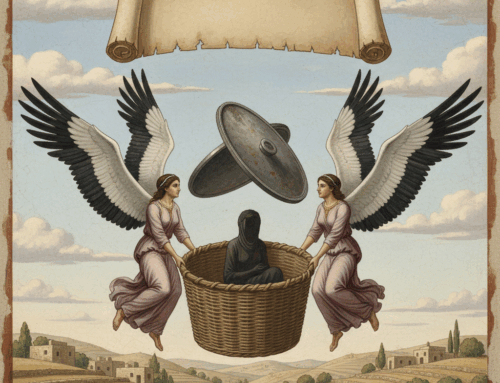
Today we undertake our study of the book of Zechariah. Since I have been telling you this study was coming, perhaps you have undertaken to read the book. If so, you may have noticed that it is very strange. Perhaps you’ve wondered if Zechariah himself was a bit strange. Certainly, his experiences were. Here is a man who sees angels riding colored horses, sees flying scrolls, and even watches a woman stuffed into a basket. Clearly, this is a different form of communication than most of the rest of scripture.
Saint Arthur of Hebrews tells us that God spoke to our forefathers through the prophets in many times and in many different ways. What St. Arthur is communicating is that if you really want to hear the word of God, you will be prepared to do so in whatever form of language God desires to speak. That’s a difficult proposition. You and I know many Christians who prefer to hear their word of the Lord from the apostle Paul in his epistles, and other Christians who prefer to just stick with the gospels. But as he moves among us, God speaks to us in a variety of ways. And here, in this book, God chooses to speak to his people through Zechariah by a series of night visions.
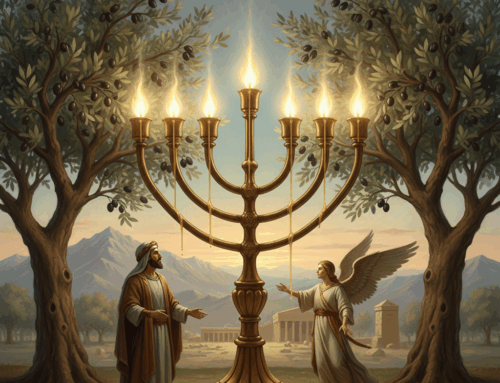
In what seems to be only one night, Zechariah receives a series of visions. Each one is a piece of a long tapestry. God sends an interpreting Angel to stand alongside the prophet and point out the things he needs to see and proclaim. God wants to get his word across not only intellectually, and physically, but emotionally. Apocalyptic imagery is emotional. God wants his people to feel something. We will not study the entire book, only the night visions found in the first six chapters. But we will also cover this introduction of 6 verses because they state the purpose of the entire book.
There are two main things we should notice from these first 6 verses. The first is what Zechariah tells us about his own place in history. Second, we will notice Zechariah’s burden for his own ministry.
ZECHARIAH’S HISTORY
In the eighth month, in the second year of Darius, the word of the Lord came to the prophet Zechariah, the son of Berechiah, son of Iddo…. First notice that there is something different about the timestamp of this prophecy as compared to other Old Testament prophecies. There is no king in Israel by which to date this prophecy. It must be dated by the reign of a Pagan king. We also know with a fairly accurate projection that Zecharia’s calling took place in October of 520 BC. That place is Zecharia’s calling within the same century of Israel’s most cataclysmic event: the fall of Judah and Jerusalem and the Babylonian enslavement of the people.
That event took place in the year 605 and is described in the opening few verses of the book of Daniel. Nebuchadnezzar leveled the city and took anyone considered useful enough to be a slave back to Babylon. You may remember this event and the description of its aftermath from our having studied Lamentations this year. In Babylon, as in Egypt centuries before, God’s people experienced bondage, slavery. God had removed them from their promised land and sent them back to the place where he first called Abraham. These are Abraham’s people driven out of Abraham’s land and placed back into the land from which Abraham had come.
But the prophet Jeremiah predicted that in 70 years’ time God would do something unexpected again. He would yet again free his people from slavery and bring them back again to the promised land To rebuild the holy city of Jerusalem and its temple so that they could worship God again. Those promised events took place 20 years prior to Zecharia’s calling. During those two decades the people began to enjoy renewed prosperity and blessing. Haggai, Zecharia’s contemporary, spoke of the quality of the housing people built for themselves. Despite the quality of their personal lives, the temple remained unfinished. Only the foundations have been laid.
So, in 520, in August towards the beginning of the school year, two dramatic events took place. The first was that the prosperous harvests that had allowed the people the resources to build their fine homes came to an abrupt end. God raised up the prophet Haggai to preach to the people that they had sown but had not reaped. They gathered abundant resources and kept all of it for themselves as God’s temple still sat in ruins. Haggai appeared at the end of this failed harvest and preached two stirring sermons about the people’s neglect of God.
By October of 520, Zechariah had joined Haggai in urging the people to return to God. Looking back on this time many years later, the book of Ezra recounts how God joined these two men together as a team to preach His Word in different ways, using different styles and each one speaking according to the burdens God had placed on his heart. The result of their preaching was that the people heard God’s word and responded in repentance. They put their own needs and desires behind God’s demand and began to rebuild the temple. And because we have not only their own books of prophecy but also historic works of the Old Testament to see how God used these two different men in two different ways for the same purpose.
That is a pattern that God uses often: Two men with different backgrounds, at different stages of life, drawn together for ministry. Think of Moses and Joshua, Elijah and Elisha, Paul and Barnabas, Ezra, and Nehemiah. Two radically different people called by God to accomplish one particular task that neither would be able to do by themselves. God does this in order that the two ministers might bolster each other’s weaknesses and play to each other’s strengths.
Haggai preaches with almost unbearable plainness. There is no mistaking what he is saying. Compare his style to these apocalyptic night visions with all of the different interpretations found in all of the different commentaries. Some listeners might be drawn to the plain logic of Haggai’s prophecies. Other listeners might be drawn to the strange but vivid imagery Zechariah presents. The fact of the matter is that most people who preach have very limited styles because our styles are limited by our own experiences and our own personalities. The only obvious exception to that rule is the Lord Jesus Christ. He preached in many different styles with equal ease and excellence. He made very plain pronouncements, he preached in parables, he displayed a different style altogether in the upper room discourse.
Other than Jesus Christ, most men called to preach are of limited capacity. So God joins them together with others that can complement them so that more of the words of the Lord Jesus Christ can be heard by those to whom they preach. But the real issue was not whether one group of people liked one particular prophet and another group followed another prophet. The one overarching issue, which we read in the first 6 verses, was how the people responded to God’s Word regardless of the messenger. By whichever messenger in whatever form the question is how are you responding to the Word of God?
On that great final day it is very unlikely that God will ask you under whose ministry did you sit. He will not ask you if you found that particular preacher entertaining. Rather, he is going to ask you, “How did you respond to my Word?” God often joins messengers together so that more people will hear God’s Word and be without excuse. There is an old preachers story which old preachers like me find illustrative of this point. The story tells of a young guest preacher standing at the back door with the church’s pastor greeting people after the service.
An elderly woman approached a young preacher grabbed his hand and said in a rather loud voice, “Young man, that is the best sermon I have ever heard!” Of course, she said it loudly and within earshot of the church’s pastor. The young preacher was terribly embarrassed. But the pastor simply smiled. And the more embarrassed the young preacher got the more the old pastor smiled. As the young preacher groped for something to say, the old pastor interrupted to explain that this elderly member had been deaf for the last 20 years.
You see, that could be true spiritually for any of us in this church right now. We could be completely deaf to the Word of God. At the end of the day it does not matter who has been preaching to you, it only matters that you hear the word of God once more, repent of your sins and return to him. That is why God often places multiple people with multiple gifts into the same ministry. That is why you have multiple elders in this congregation. We are one in Christ Jesus, but we are different men, with different burdens, and different personalities, all of us called to teach and preach and reach individuals. But all of us called for one thing: so that you may hear the Word of God.
Zachariah’s burden for ministry arose out of the history of his own people. It was not that God had not told them what he expected. He sent prophets to them throughout their history. All different people speaking in many different styles. But there comes a point in listening, even to God (especially to God!), when we choose to go deaf. We no longer hear the voice of God not because we can’t, but because we won’t.
That’s partly why God joined two prophets together in the same ministry at the same time in the same city. They needed each other’s encouragement to continue on preaching against the hard hearts of Jerusalem. And they were from what we can tell two very different men in two very different stages of their careers. We’re fairly certain that both of these prophets were priests. Zachariah, both from his own work and from the book of Ezra, we know to be a priest. His father is not recorded as being a priest likely because he passed away early. But his grandfather was a priest for many years.
And if you read through the book of Haggai, you will notice he seems to be a priest himself. He has an intimate knowledge of the sanctuary and the things in it and in certain parts of his book he even sounds like a priest. So it is likely that both of these men were of the priestly line. But their similarities end there. Haggai asks his listeners how many of them had actually seen the former temple before its destruction. That suggests that he may have been old enough to have seen it. If so, he is obviously much older than Zechariah, who returned as a freed captive sometime within the last 20 years.
By this time Haggai was an old man. You may recall that priests had a mandatory retirement age of 50 years. After 50 years old, most men could not read scripture anymore (since there were no eyeglasses or magnifying glasses back then). So, as far as we know, Haggai has been out of active ministry for some time. But God has called him back to preach. By contrast, Zechariah has a need several times in his prophecies to defend himself as a prophet. You will see several occasions where he tells the people that when these things come to pass they will know that he is truly a prophet.
One profit is so old he has nothing left to lose. One is still in the prime of his priesthood and has everything left to lose and is clearly a little nervous about the reception he will receive. If you read these two books together, you would notice that this very old man managed to preach for four months. Zachariah was still going strong after two years, emboldened by the heroic sacrifice of his aged colleague. Haggai, for his part, would have been encouraged to know a younger man had taken up his calling and continued on encouraging the people to return to the Lord.
If you are a mature senior you should take some encouragement from Haggai. You are never too old to matter to God. He uses people regardless of their strengths, weaknesses, age, infirmity, or even reputation. You are never too old to share the words of God with your neighbors. But it’s easy for us to get very comfortable just like the Israelites in the days of these two prophets. After all, who really wants to labor to build a temple so much when so much of my time is required just to feed my family and build my own house. And after I spend a life of doing that, I want to sit back and enjoy it while my children take care of me. If God is so powerful let him build his own temple!
Contrast that idea to the message of Haggai and Zachariah, an old man long past his prime and a younger man in the prime of his life putting his career on the line for the glory of God. It is the task of the older Saints to invest their lifelong blessings and they’re younger partners in ministry. And it is the task of the younger members of the church to pursue the blessings of wisdom treasured up in the older people of the church.
BURDEDN FOR MINISTRY
So ww have seen something of the historical and social setting of Zechariah’s ministry. So let’s introduce ourselves to the burden of his ministry. It’s clear in the opening verse that the prophet is called by God to see things from God’s perspective and communicate that to the citizens of Jerusalem. Then, in verses 2 through 6, We see that God gives this prophet a very particular burden. The great burden of Haggai’s ministry was for the rebuilding of the temple. In these 5 verses, we see the great burden of Zechariah’s ministry for the people’s repentance.
Zechariah’s longing for the people’s repentance Is based upon a principle that runs throughout all of scripture, that the only ones who can enter into the riches of God’s blessing are those who come to God in repentance. When God urges them to “return” he means for them to repent, to agree that their thinking and behavior is fleshly, self-interested, downright evil and to throw themselves upon the mercy of God. Repenting, returning is, as Martin Luther wrote, something that God intends for us to do the whole of our lives, not merely at first.
There is a vital and intimate relationship between my repentance and my witness for Christ. Zechariah feels a desperate urgency for repentance among the people. Why? Because you cannot have a relationship with God without a life of constant repentance. God’s law demands perfection. Zechariah preaches in verse 2 that their forefathers refused to repent and return and died in God’s wrath. Quote next word the original text is quite emphatic. God was not simply angry with them he was “very angry… with anger.” The word that is used appears frequently in the Old Testament as a reference to God’s jealousy. God refuses anything less than repenting and returning to their covenant creator our Covenant Creator.
God wants the attention of his people. In eternity God will have your complete, enraptured devotion and attention because you will then be a perfect and glorious creature if you are now trusting into Jesus’ perfectly lived life and sacrificial blood shedding death. The Israelites had a long history of despising God’s demands for repentance.
In verse 4 he warns them not to be like the previous generation, whom we last saw weeping amidst the devastation and rubble of Jerusalem when we left the book of Lamentations. They refused to listen to God’s repeated warnings. They refused to take him seriously when he wiped out the northern Kingdom. They ignored, tortured, and killed the prophets God sent. Zechariah is burdened because he sees his generation heading in the same direction and perhaps towards the same destructive end.
4 Do not be like your fathers, to whom the former prophets cried out, ‘Thus says the Lord of hosts, Return from your evil ways and from your evil deeds.’ But they did not hear or pay attention to me, declares the Lord. Note that the people “would not” listen. It reminds us of the words of Jesus about to enter Jerusalem for the final time, “O Jerusalem, Jerusalem, the city that kills the prophets and stones those who are sent to it! How often would I have gathered your children together as a hen gathers her brood under her wings, and you were not willing! 38 See, your house is left to you desolate. 39 For I tell you, you will not see me again, until you say, ‘Blessed is he who comes in the name of the Lord.’” [2]
That is why repentance is so vital. When you come to a stage where you cannot because you will not come then you have come to outer darkness. You are on the other side of a very thin line. That’s what scares Zechariah. That is his great burden for ministry. He is to proclaim for God the one thing that God’s law cannot accomplish: repentance. God’s law cannot accomplish repentance in the hearts of men. Only God’s Spirit can move the hearts of sinful men to repent.
There is the Great Divide that mere sinful men can never cross. But there is a solution. Zechariah sees that solution in his night vision. He sees a man on a red horse standing among the myrtle bushes by the deep. As we will begin to see next week, it is that man, the Angel of the Lord, who will provide the great solution to the great divide.
[1] The Holy Bible: English Standard Version (Wheaton, IL: Crossway Bibles, 2016), Zec 1:1–6.
[2] The Holy Bible: English Standard Version (Wheaton, IL: Crossway Bibles, 2016), Mt 23:37–39.