
Galatians 3:1-9
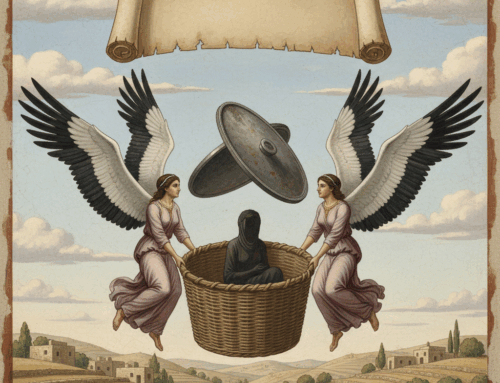
Eyesight Problem: O foolish Galatians! Who has bewitched you [given you the evil eye]? It was before your eyes that Jesus Christ was publicly portrayed as crucified.
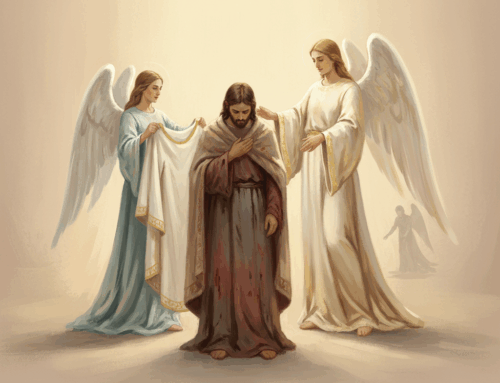
Hearing and Memory Problem: 2 Let me ask you only this: Did you receive the Spirit by works of the law or by hearing with faith? 3 Are you so foolish? Having begun by the Spirit, are you now being perfected by the flesh? 4 Did you suffer so many things in vain—if indeed it was in vain? 5 Does he who supplies the Spirit to you and works miracles among you do so by works of the law, or by hearing with faith— 6 just as Abraham “believed God, and it was counted to him as righteousness”?
Family Problem: 7 Know then that it is those of faith who are the sons of Abraham. 8 And the Scripture, foreseeing that God would justify the Gentiles by faith, preached the gospel beforehand to Abraham, saying, “In you shall all the nations be blessed.” 9 So then, those who are of faith are blessed along with Abraham, the man of faith.
Have you ever gone out of your way to do something really kind – really self-sacrificing, perhaps even truly exhausting – for other people? If you’re a parent, chances are you have done this many times over. But what happens when you don’t get your “Thank you”? How do you feel when your labors are not recognized and truly appreciated? We all want validation. We all want to be justified. At the end of the day, we want our “Thank you” note.
Paul’s letter to the congregation of Southern Galatia is his attempt to free them from their self-justification projects and show them that everything they need, they already possess in Christ Jesus. Every one of us lives for that passing grade; the only questions are: “Do I earn it for myself?” (Theologians call this Palagianism); or, “Do I earn it with the help of someone else?” (Semi-Palagianism: God helps those who help themselves); or, “Do someone else completely earn it for me?”(the Gospel).
The “nice men from Jerusalem” who came to the Gaulic churches to tell people how to be nicer were Semi-Palagians. They slipped in on Paul’s heals and taught the only true way to ensure God’s approval was to keep the Mosaic Law: eat kosher, get circumcised, and commit to try harder and do more. The harder you work the steps, the more approval you will receive from God. The more you can control the outcome, the happier both you and God will be.
Our passage this morning shows us how the Gaulic churches forgot Jesus in their quest to improve themselves and manage the outcome of their lives. Paul points out several problems with their self-improvement project: (1) they have eyesight problems; (2) they hearing and memory problems; and (3) they have family problems.
-
- EYE PROBLEM (3:1)
- Fools!
-
-
-
- Paul begins, “O foolish Galatians!”
- Article 20 of the Augsburg Confession says, “Whoever, therefore, trusts that by works he merits grace, despises the merit and grace of Christ, and seeks a way to God without Christ, by human strength….” (Emphasis added)
- What would drive Paul to call these people whom he had lived with, suffered with, and ministered to day and night “fools”? The glory of the Lord Jesus Christ, who loved Paul and died for Paul, is at stake!
- The fool says in his heart, “there is no God” (Ps. 14:1; 53:1). The Galatians were functioning as atheists. There were not looking to Jesus as the author and perfecter of their faith. They had forgotten the work of the Holy Spirit among them.
- If men can earn ANY kind of holiness before God – with our without trust in Christ – then the glory of the Godhead is diminished. Those who bind themselves into slavery to the Mosaic Law are FOOLISH.
- Jesus called the disciples on the Emmaus Road “fools and slow of heart” because they had missed the glory of Jesus at the cross of Calvary. Paul is making the same accusation.
-
-
- Evil Eye
-
-
-
- Paul asks, “Who has bewitched you?”
- That word “bewitched” is more than an old TV show. It means to give someone the “evil eye.” The ancient Greeks had a great fear of the evil eye – a curse placed upon someone by a mere look from a sorcerer or witch.
- The nice men from Jerusalem weren’t so nice after all. They were witches, sorcerers, demonic. The very essence of witchcraft is the attempt to control any outcome by appeasing supernatural forces; giving something to get something; saying magic words, practicing rituals, making certain offerings to please a god or appease a demon all so that you can achieve a certain outcome.
- Jesus + performance IS PAGANISM; it is the “evil eye”. It is demonic. That a world-wide, self-professing church teaching “grace +law” and denying the authority of the Word could be filled with child abusers would not shock Paul.
- Read Genesis 3. To reject any part of the work of the Promised Seed is to accept the work of the evil one. Pagan doctrine breeds pagan practice. The nice priests from Jerusalem were leading the Gaulic people into the slavery of dark magic.
-
-
- Blind Eyes
-
-
- Paul says, “It was before your eyes that Jesus Christ was publicly portrayed as crucified.”
- Do you see the eye problem? They had been given the “evil eye” and now they could no longer see Jesus crucified.
- Paul uses a media word here. He had “tacked up posters of Jesus Crucified right in front of eyes.” It was a word used of putting up posters and announcements in the public square, on the courthouse steps (if you will).
- Paul isn’t saying he literally hung a crucifix or put up Jesus pictures. But he IS saying he preached Jesus to them so clearly that the Galatians could actually see Calvary in their mind’s eye.
- The text stresses that Paul didn’t just preach that Jesus was crucified, but that Jesus was the crucified savior. That is, Jesus crucifixion WAS our salvation. But the Galatians can no longer recognize that picture because they now crave to be told what to do, not whom to behold.
- Paul placarded Christ crucified as the complete remedy for man’s condition. I long for no greater thing to ever be said of me than I have portrayed Christ crucified before your eyes. His sufferings were completely atoning. His work was the sole sufficiency for God’s approval.
- Paul wrote to the Corinthians, “And I, when I came to you, brothers, did not come proclaiming to you the testimony of God with lofty speech or wisdom. For I decided to know nothing among you except Jesus Christ and him crucified” (1 Cor. 2:1-2).
- The most practical doctrine in the world is not “the ___ steps to being a better ___.” It is Jesus Christ and him crucified. Receiving this doctrine with trust is the work of the Holy Spirit, whom the Galatians were ignoring in the midst of their hearing and memory problems.
-
- HEARING, MEMORY PROBLEMS (3:2-6)
- Hearing Problem (2, 5)
-
-
-
- In v. 2, Paul asks a second question: “Did you receive the Spirit by works of the law or by hearing with faith?”
- Now Paul says they not only have an eye problem; they also have a hearing problem. Verse 5, “Does he who supplies the Spirit to you … do so by works of the law, or by hearing with faith…?”
- Paul prefaces his question by saying he is willing to rest his entire case on this one answer to his question. “Let me ask you only this….” It’s a very dangerous thing for a lawyer to rest his or her entire case on one question. Paul is a lawyer. But he is absolutely certain of the answer.
- Did the Holy Spirit fall upon you all because you all good little Galatians or because you trusted into Christ when you heard me preach? Many of the Galatians probably didn’t know a great deal about the Mosaic Law. They were mostly Gentiles; they could not do works of a Law they didn’t know.
- The converted Jews of Galatia, Paul argues, did not receive the Holy Spirit by trusting in Moses. When they abstained from bacon or clams, the Holy Spirit did not show up and give them any spiritual sign of His presence or approval.
- Remember we spoke a few weeks ago about Peter visiting the home of Cornelius the gentile God-fearer in Acts 10. Cornelius had some understanding of the works of the Law because he was willing to accept the God of the Jews (just not willing to be circumcised).
- Peter went into his house, ate non-kosher food with him and preached the gospel. All the Gentiles present trusted into Christ and the Holy Spirit fell upon them with signs and wonders as they heard Peter preach.
- Peter had to defend himself for eating with gentiles in front of the honchoes and high muckety-mucks of the Jerusalem church. His defense was that the Holy Spirit had fallen on the Gentiles as they heard the Word. The Holy Spirit fell on the Samaritans. He fell upon all who heard the apostolic teaching with signs and wonders. There’s no reason to believe that the Galatians were exempt from those gifts of prophecy and tongues and healings.
- The Spirit worked through the preaching of the Gospel that Jesus paid it all. He still does.
-
-
- Memory Problem
-
-
- The Galatians also had a memory problem. They forgot how they received the Holy Spirit. “Are you so foolish? Having begun by the Spirit, are you now being perfected by the flesh? 4 Did you suffer so many things in vain—if indeed it was in vain? 5 Does he who supplies the Spirit to you and works miracles among you do so by works of the law, or by hearing with faith….”
- Having begun by the Spirit, are you now being perfected by the flesh? Verse 3 is very telling. It diagnoses what creeps into the heart of every Christian: the craving to perfect ourselves by performance; God’s grace gets us in, but our work keeps us in. The more we can say we “keep” the Law, the more IN we think we are.
- If I am achieving ‘victory’ by not stealing my neighbor’s property, God will love me more. If I am having a bad day, God must be punishing me for not doing enough. I must perform to receive; I must give to get. This is paganism, being perfected by the flesh.
- Business equals Godliness. The busier we are inside the church, inside our families, inside our jobs, the more impressed both God and men will be with us. We tie our worth and value to what we can accomplish because our flesh hates the indignity of God’s indiscriminant, promiscuous acceptance that strips of any moral leverage.
- But it was God’s indiscriminant acceptance that caused the Holy Spirit to fall upon us, to changes our hearts so that we willingly trusted into Jesus’ saving life and death. We began by the Holy Spirit working through the Word and we DO NOT end in any different way!
- Recall in Acts 14 that the Holy Spirit testified to the truth of the Gospel. Luke wrote of Paul and Barnabas’ preaching in Iconium, “they remained for a long time, speaking boldly for the Lord, who bore witness to the word of his grace, granting signs and wonders to be done by their hands” (Acts 14:3).
- So Paul is asking the Galatians to remember that the Spirit testified to the Gospel with miracles. Paul healed a cripple in Lystra after escaping a stoning in Iconium. Then he is stoned and left for dead in Lystra where the people had shortly before tried to worship him and Barnabas as gods. In yet another miracle, Paul is raised up from his stoning and continues on ministering.
- Paul asks if they are stupid enough to believe that having been resurrected by the Spirit from death to new life, it is now up to them apart from the Spirit and in their flesh to perfect themselves by works. “…flesh is taken … in the sense of everything that is outside grace and the Spirit of Christ. For it is certain that the Galatians are ending with the flesh, not because they were indulging in excesses and lusts or in carnality in some of their customs, but because they were abandoning faith and seeking the works of the Law and its righteousness.”
- They had forgotten seeing the works of the Spirit that accompanied the Gospel. They had even forgotten why both Paul and they were willing to suffer persecution from both Jew and Gentile.
- Paul wonders if their suffering had been useless, or even worse than useless (the meaning of if indeed it was in vain). “Paul is really saying: ‘if indeed in vain is strong enough to suggest what it is.’ The point is not merely that they are losing the fruit of the suffering which they once bore: they—who were tried and appointed to suffer as Christians—must fear that their denial of this suffering will be reckoned to them as guilt, and the blessing be converted into curse.”
- So the Gauls had problems with their eyes, problems with their hearing and memory, and finally, problems with their family identity.
-
- FAMILY PROBLEM (3:7-9)
- Justification by “Done”
-
-
-
- Paul has reminded these congregations of their history – the gospel they heard and the outpouring of the Holy Spirit with all his signs and wonders and the miracles worked through Paul and Barnabbas. But powerful experience ungrounded from Scripture is really no argument at all.
- So Paul turns to scripture, just as the nice men from Jerusalem had done. The nice men were teaching people that God’s blessing came through being Abraham’s children who follow Moses’ Law.
- They had everybody in Galatia singing the “Father Abraham” song. Real Christians will get circumcised like Father Abraham; but, more importantly, they will keep kosher, and raise their hands, with tears welling up, during the campfire meetings to re-dedicate their lives to keeping the Law of Moses. And who wouldn’t want to do that after the 30th chorus of Kum Ba Ya and a belly full of smores?
- The nice men from Jerusalem had opened up the scrolls of Genesis and Exodus and preached that the only way for all the nations (Gentiles) to be blessed was by DOING certain things.
- To be justified they had to DO something. Faith was good, but it needed to be a working faith that performed the faithful works of the Law.
- The Law was being publicly portrayed before the eyes of the Gauls as the means of justification by doing. So Paul says, “All right, let’s talk about the picture Moses draws for us of Father Abraham. Abraham lived under the banner of ‘DONE’ just like all who trust in the person and work of the Promised Seed, Jesus.”
-
-
- Abraham Trumps Moses
-
-
- Later on in this letter Paul will tell us that Moses was important, but Abraham is far more important. The nice men from Jerusalem were promoting a “Back to Moses” movement. Paul is saying they haven’t gone far enough back.
- The movement of Scripture is a Back to Abraham movement. Our family identity is not in Moses, but in Abraham who had righteousness credited into his account by means of trust in God’s promises.
- Abraham’s circumcision was a sign and seal of his trust in God’s promise. But as is so often the case with outward, visible symbols, the sign and seal gets elevated into a saving act because our hearts long for performance-driven outcomes, things WE can do to control our environment and reach our goals.
- God’s love and approval of Abraham could not have come through the Mosaic Law because the Law didn’t arrive on the scene until 4 centuries after Father Abraham. So Abraham had to be justified apart from anything he had done. Abraham lived under the banner of “Done,” not “Do”.
- One theologian states it this way: “We are justified freely, for Christ’s sake, by faith, without the exertion of our own strength, gaining of merit, or doing of works. To the age-old question, ‘What shall I do to be saved?’ the confessional answer is shocking: ‘Nothing! Just be still; shut up and listen for once in your life to what God the Almighty, creator and redeemer, is saying to his world and to you in the death and resurrection of his Son! Listen and believe!’”
- Paul is saying that Abraham’s “Old Time Religion” is good enough for the Galatians, for him, and for you and me. Be still. Listen to what God promised to Abraham and delivered in Christ.
- Not even our trusting God is a work we do. It is a gift God gives, as Paul tells us in Ephesians 1. So even those of us with a very weak faith still trust into the same strong God. Our trust may shrink or grow with circumstances, but Jesus Christ is the same yesterday, today, and forever (Heb. 13:8).
- The person who has trust is no longer looking AT himself or herself and no longer looking TO himself or herself. He no longer looks at anything he once was; she no longer looks at what she is now or what she hopes to be as a result of her own efforts. The person who has saving trust looks entirely to the Lord Jesus Christ and his finished work and rests ENTIRLY on that alone. Faith does not say, “I used to do this but now I no longer do.” Rather, it says, “Yes, I have sinned grievously; I have lived a life of sin. Yet I know I am a child of God because I am not resting on any righteousness of my own. My righteousness is in Jesus Christ and God has credited that to my account.”
- That was Abraham’s faith. That is the “faith alone” of which Paul speaks. That is the faith that makes us free. We can NEVER be free until we no longer believe that God is keeping score.
-
The Gospel is God’s announcement of descending, no-strings-attached, one-way love. That means that God’s love for us is not dependent on our love for others. It’s not dependent even upon our love for God. We love him (in but a weak and dim way) only because he first loved us with infinite love that never had a beginning and will