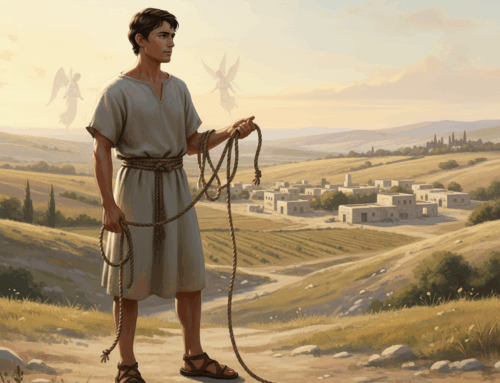

Matthew 21:1-11
Now when they drew near to Jerusalem and came to Bethphage, to the Mount of Olives, then Jesus sent two disciples, 2 saying to them, “Go into the village in front of you, and immediately you will find a donkey tied, and a colt with her. Untie them and bring them to me. 3 If anyone says anything to you, you shall say, ‘The Lord needs them,’ and he will send them at once.” 4 This took place to fulfill what was spoken by the prophet, saying,
5 “Say to the daughter of Zion,
‘Behold, your king is coming to you,
humble, and mounted on a donkey,
on a colt, the foal of a beast of burden.’”
6 The disciples went and did as Jesus had directed them. 7 They brought the donkey and the colt and put on them their cloaks, and he sat on them. 8 Most of the crowd spread their cloaks on the road, and others cut branches from the trees and spread them on the road. 9 And the crowds that went before him and that followed him were shouting, “Hosanna to the Son of David! Blessed is he who comes in the name of the Lord! Hosanna in the highest!” 10 And when he entered Jerusalem, the whole city was stirred up, saying, “Who is this?” 11 And the crowds said, “This is the prophet Jesus, from Nazareth of Galilee.” [i]
The most important life ever lived was that of Jesus Christ, and the most important part of that life was the momentous week that ended it. The week began with Jesus’ entry into Jerusalem on Palm Sunday. It included his prophetic judgment of the temple, the final teaching, the institution of the Lord’s Supper, and the arrest, trial, and crucifixion. It ended with Jesus’ resurrection from the dead on Easter Sunday. Eight momentous days in all.
This final week is so important that the Gospels give a disproportionate amount of space to it. Jesus lived thirty-three years. His active ministry occupied three years. But large portions of the Gospels are given over to the events of just the last eight days. Matthew devotes one-fourth of his Gospel to it (chaps. 21–28). Mark uses one-third of his Gospel (chaps. 11–16). Luke gives a fifth of his chapters to the events of this last week (chaps. 19:28–40). Most remarkable of all, John gives half of his Gospel (chaps. 12–21). Taken together, there are eighty-nine chapters in the Gospels, but twenty-nine and a half of these (exactly one-third) recount what happened between the triumphal entry and Jesus’ resurrection. Such is the case because these are the climactic events not only of Jesus’ life but of all history. They were planned from before the foundation of the world, and our salvation from sin and wrath depends on them.[ii]
As are all the stories in Matthew’s Gospel, this section, often called the “triumphal” entry, is designed to help us recognize from afar some of the distinct features of Christ. It is to help us recognize and respond to him as the promised King, the one who has come in the name of the Lord.
FULFILLMENT
There are two major points for us to notice this morning. In verses 1-7 we find the theme of fulfillment, our first major point. There are actually 2 fulfillments in this famous scene. There is the fulfillment of a present command and the fulfillment of a past prophecy.
First there is the fulfillment of Christ’s present command. In verses 1-3 Jesus describes what two of his disciples are to do and what they will encounter in doing it. These two are to go into the village. There they will find a mother donkey and her foal, or colt. Those animals will be tied up. The disciples are to untie them and bring them to Jesus. Jesus further instructs them that if anyone interferes, they are to say, “The Lord needs them” and they will encounter no further opposition (21:3).
What’s happening here? Did Jesus prearrange this? Did the owner of these animals have some angelic revelation of the plan? Or was this owner merely a Jesus follower who gladly gave them what they wanted when he heard the word “Lord.” We are not told. What we are told, in verses 6, 7, is that what Jesus told the disciples to expect and to do was precisely fulfilled.
The fulfillment of Christ’s present command (whether natural or supernatural) is not the main point of verses 1-7. There is another, deeper, greater fulfillment that demands our attention. In verse 3 we read of the animals that, “The Lord needs them.”
It sounds paradoxical. Does the Lord really need anything? Does Jesus, who has walked everywhere over Israel from north to South need these beasts of burden for his overburdened legs? No. That’s not why he needs the animals. The reason he needs them, and specifically the colt, is to reveal who he is and what his mission is all about. He needs them to fulfill a past prophecy.
In 1 Corinthians 15:3, 4 we are told that Jesus died “in accordance with the Scriptures” and that he rose again “in accordance with the Scriptures.” Here in Matthew’s Gospel we should notice that Jesus rode into Jerusalem on a colt, of all animals, also according to the Scriptures—in other words, to fulfill a specific Old Testament prophecy, Zechariah 9:9, which Matthew alone of the four Gospel writers quotes:
4 This took place to fulfill what was spoken by the prophet, saying,
5 “Say to the daughter of Zion, ‘Behold, your king is coming to you, humble, and mounted on a donkey, on a colt, the foal of a beast of burden.’”
Zechariah is often called a “minor profit,” but his prophecies are of major importance, because he is alluded to or quoted over 80 times in the New Testament. Matthew quotes one of Zechariah’s most famous prophecies, in which he exhorts God’s people, whom he calls the “daughter of Zion,” to celebrate their future. He invites them to rejoice in the promise of the coming King and in the establishment of his Kingdom:
Rejoice greatly, O daughter of Zion! Shout aloud, O daughter of Jerusalem! Behold, your king is coming to you; righteous and having salvation is he. . ..
As we hear the lines from that prophecy, we might think it to be natural that if God were to raise up an earthly king to bring divine victory and to inaugurate his peaceful Kingdom, such a ruler would be a righteous deliverer. That makes sense. It’s a contrast to the many wicked kings who have preceded him. We would only expect that God’s divinely appointed king would conform to the morality of God’s Law and bring with him redemption for God’s people.
Yet, when the prophet goes on to show this great king as being “humble and mounted on a donkey,” we’re tempted to think something is wrong. Humble? Donkey? Is this a misprint? It should be “glorious.” He should be riding a “War Horse.” But this is no mistake of translation. It is no misprint. The prophet intentionally wrote of this king being humble.
In the context of the Old Testament prophets, this word “humble” does not mean so much “gentle” as it means “lowly” or “bowed down” or even “full of suffering.” The word couldn’t raise the whole of the lowly, miserable, suffering condition, elaborately depicted in Isaiah 53. So, in contrast with the arrogance and violence associated with earthly kings, this king will be poor and afflicted. He will be a sovereign Lord and yet a suffering servant.
To accentuate this description of humility, this king will come “mounted on a donkey.” So, let’s talk about this whole donkey thing for a little bit. To prophecy that a king would come in this specific way must have sounded bizarre both to Zechariah and his original audience. Since the time of King Solomon, when the breeding of horses was introduced, we are given no example in the Old Testament of any royal figure riding such a beast. We would be hard pressed to find an example in all of antiquity of any sort of ruler mounted on a colt. The only example we find comes from Genesis 49:11, which talks about the coming king as being from the tribe of Judah:
Binding his foal to the vine and his donkey’s colt to the choice vine, he has washed his garments in wine and his vesture in the blood of grapes.[iii]
It would be laughable to think about a Roman emperor straddled over a slow, dirty, undignified, and unpretentious beast. It would be akin to our president making an official visit to our town riding a tricycle. When the king comes to town, the expectation is that he will ride proudly upon a battle steed at the head of a parade of decorated soldiers, as Alexander the Great did when he rode into Jerusalem in 332 BC. And yet Zechariah envisions a king who will ride into Jerusalem mounted on the foal of a donkey.
500 years passed from the time Zechariah wrote those words. 500 years passed until, as all four Gospel accounts tell us, Jesus asked for a colt. He was brought a colt, and he sat on it. He sat on the cloaks of his disciples that they draped over the mother and her foal, and he rode the young, unbroken donkey.
The phrase “he sat on it” is not as dramatic as his proclamation “It is finished.” But both phrases are equally significant. Both involve the fulfillment of messianic prophecy. If someone wanted to know why you are a Christian, you could point them to the fact that these prophecies hundreds, even thousands, of years before Jesus fit no other figure in either the Old or New Testament but the Lord Jesus Christ. The prophecies are true. Jesus Christ is true. His Word is true. Christianity is true!
In our tolerant and pluralistic world, the word “true” has fallen on hard times. Pontius Pilot’s skeptical reply to Jesus (What is truth? John 18:38) has become the slogan of our postmodern culture. Yet it ironically affirms only one truth claim: objective and universal truths are not true. Which of course is a self-defeating fallacy. It states what it claims to be a universal truth while at the same time claiming there is no such thing as universal truth.
I’m sure all of you have experienced a conversation in which you tell your unbelieving friends or family that you firmly believe that Jesus is the way, the truth, and the life and that no one can come to God the Father except through trust into Jesus. In return, you receive some patronizing remark about how nice it is that you have found religion or something to get you through these tough times. It’s rare to encounter someone who gives an honest answer. It’s rare to have someone tell you what you believe is simply not true or merely a crutch for the feeble minded.
That would be a refreshing conversation in this day and age. But nobody ever calls you a liar or a fool for believing in Jesus. They just say, “That’s nice for you, but not for me. That is your truth, but it is not my truth.” When you became a Christian, you discovered that you have a mind, a mind that has been designed to love God and to receive what he says as absolute truth.
In Acts 26 when Paul the prisoner stood before King Agrippa and his royal court to defend his case, he appealed to the reason of scripture.
Paul says to Agrippa, “To this day I have had the help that comes from God, and so I stand here testifying both to small and great, saying nothing but what the prophets and Moses [the Old Testament] said would come to pass: …that the Christ must suffer and that, by being the first to rise from the dead, he would proclaim light both to our people [i.e., Jews; Paul and Agrippa are both Jews] and to the Gentiles” (v. 22). At this point Festus, who is the procurator of the Roman province of Judea, interrupts “with a loud voice,” saying, “Paul, you are out of your mind; your great learning is driving you out of your mind” (v. 24). But Paul retorts, “I am not out of my mind, most excellent Festus, but I am speaking true and rational words” (v. 25). How can Paul make such a statement—that the gospel he is presenting is true and rational? It is true and rational when one sizes it up, as Paul has just said, with the Old Testament prophetic writings. So Paul appeals to Agrippa: “For the king knows about these things, and to him I speak boldly. For I am persuaded that none of these things has escaped his notice, for this has not been done in a corner. King Agrippa, do you believe the prophets? I know that you believe” (vv. 26, 27).[iv]
There’s the question. Do you believe the prophets? If you believe the prophets, you should believe Jesus to be the Christ. The king, feeling a bit pushed into a corner, feeling that he is now on trial, quickly changes the direction of the conversation. In fact he brings it to an end. He leaves his mind at the door. Agrippa said to Paul, “In a short time would you persuade me to be a Christian?” (v. 28). In other words, he says, “Do you think you can so easily and quickly change my mind? In such a short span of time do you think you can convince me that Jesus fulfills the prophets?” And Paul says to him (I love this final reply), “Whether short or long, I would to God that not only you but also all who hear me this day might become such as I am” (i.e., a Christian).[v]
The prophet Zechariah, if you were to read the whole of his prophecies, gave two seemingly contradictory prophecies. In Chapter 9, he spoke of the coming of a human king and then in chapter 14 of the coming of a divine king. And it is in the incarnation and revelation of Jesus Christ, and him alone, that these two apparently incongruent images integrate into one divine-human King.
Jesus is the son of David, and Jesus is David’s Lord. In his first appearance he comes, as the prophets foretold, as the humble king the king who came to suffer and die for the sins of the world, the king who came to bring salvation. When he returns, as the prophets also foretold, he will then consummate his Kingdom and rule the earth in perfect righteousness and glory. We are Christians because we know that Christ fulfilled the scriptures and that in him all the prophecies find their “Amen” (2 Corinthians 1:20). All the puzzle pieces of the Old Testament prophecies, when rightly fit together, show us the portrait of Jesus. They identified his facial features, his hands, feet and side. They identify him to be just the Man, just the King, just the Savior for which we have been looking and longing.
INTENTIONAL AUDACITY
It’s rare in our Western culture to meet people who do not claim to admire Jesus in some way. They may not care for Christianity as a system of thought or the church is a religious institution, but they like to think they admire Jesus for his fearless counter culturalism, his championing the cause of the poor, his friendship with the outcast, his compassion for the despised and rejected, his moral teaching on loving one’s neighbor, or the fact that he actually practiced what he preached. Most people seem to esteem Jesus for his genuine humility.
But to come to grips with Jesus as he is represented in scripture (which is the only place you will find Jesus), one still has to deal with his claims about himself. And those claims appear to be the very opposite of humility. His claims are extraordinarily self-focused. They have a certain intentional audacity about them. That is our second feature to notice about this passage: the intentional audacity of Christ.
What is most surprising about these first 11 verses of chapter 21 is not Christ’s humility but his self-promotion. His actions are predetermined. By riding into town in the way about which we read and receiving the praise he received (21:8, 9) with no personal protest, he is announcing to the world that the Messianic King has come. The irony of this royal entry is our Lord’s promotion or publication of his humble reign.
By mounting that animal and riding it into Jerusalem, Jesus is claiming to be the Messiah. He is claiming to be the fulfillment of Zechariah’s prophecy. Now those who do not wish to accept his claim and submit to him may be tempted to brush off this particular action as a mere mistake on the part of this otherwise good and humble teacher from Nazareth. But you only have to glance through the Gospels to find in Jesus a pattern of self-promotion.
For example, what are we to make of his “I am” statements in John’s Gospel? He said, “I am the bread of life; whoever comes to me shall not hunger, and whoever believes in me shall never thirst” (John 6:35). He claimed, “I am the living bread that came down from heaven. If anyone eats of this bread, he will live forever” (John 6:51). What are we to make of such claims? If we trust in Jesus, we will live forever? Really? Who talks like this? Who would dare claim, “I am the light of the world. Whoever follows me will not walk in darkness, but will have the light of life” (John 8:12)? What complete audacity to claim the world is dark, he alone is light, and one must follow him in order to get out of the darkness.[vi]
Who would dare claim to be the “light of the world” (John 8:12). What audacity to claim that the world is dark, he alone is light, and one must follow him in order to get out of the darkness. Can you imagine the Dalai Lama addressing the United Nations and saying, “I am the resurrection and the life. Whoever believes in me, though he die, yet shall he live” (John 11:25)? Can you imagine some preacher asserting his own views and claiming, “everyone who is of the truth listens to my voice” (John 18:37). Imagine an elected official making an acceptance speech following an election and claiming, “Heaven and earth will pass away, but my words will not pass away” (Matthew 24:35)?
It is one thing for a teacher to say, as Jesus did, that we are to love God with all our heart and soul and strength, but quite another to say, “Whoever loves father or mother more than me is not worthy of me, and whoever loves son or daughter more than me is not worthy of me” (10:37)? In the Gospels, Jesus cannot stop talking about himself.
Normally, we dislike people who talk so much about themselves. We are repulsed by anyone who demands our love and obedience, our total allegiance. And yet what is it about Jesus that makes him not only likeable but also believable? There is nothing so remarkable about Jesus than the fact that he advanced himself as the object of faith, love, and obedience, and yet he comes across as the most humble man to walk the face of the earth. Jesus claims to be “the greatest!” By dying and rising again, we are somehow drawn to bow our heads and agree. Why?
Jesus’ first disciples didn’t see him as delusional. Neither have the millions of people (perhaps billions?) throughout history who have and do and will bow the deed to this son of a poor Jewish maiden. There is an apparent paradox about Jesus. His claims sound like the ravings of a lunatic, but he shows no sign of being a neurotic, or less still, a psychotic. He presents himself in the Gospels as the most balanced and integrated of human beings. He covers himself with disturbing claims and yet we see him clothed with utter humility. The King of the universe comes riding on the colt of a donkey.
Jesus arranges the entire scene. He determines the details. He decides to ride slightly above the crowd into Jerusalem upon the foal of a beast of burden, which is an action little different than how he started his earthly ministry in Luke’s gospel by taking up the scroll of Isaiah, reading it in the synagogue, sitting down to teach, and then expounding the text. He said in essence that if you want to know to whom the prophet was referring, he was writing about Jesus himself.
Jesus rode into Jerusalem that first Palm Sunday announcing that Israel’s Messiah had arrived, just as Zechariah said he would. By riding that beast, Jesus was proclaiming that if you wanted to know to whom the prophet was referring, he was writing about Jesus. That’s quite mind-boggling.
When Jesus rode into Jerusalem we read that, “the whole city was stirred up, saying, ‘Who is this’” (21:10). The literal word here is the city “quaked”. The city quaked like it would quake on Good Friday as he died, and on Easter Sunday at his resurrection. They asked the right question, “Who is this?” There are two crowds here. First, there is the crowd that came with Jesus from Galilee for the Passover Feast, and then there are the residents from Jerusalem asking who this man is. It is not the crowd from Galilee but the residents of Jerusalem who will, by week’s end, cry out for his crucifixion. And it is Jesus himself who deliberately provokes their hatred and resentment.
So we may shout in true understanding of the phrase which the crowds did not understand. Yet we join them in their cry, “Hosanna!” Lord, save us now. “Blessed is he who comes in the name of the Lord!” The earth still quakes, and we still shout, “Come and save us!”
[i] The Holy Bible: English Standard Version (Wheaton, IL: Crossway Bibles, 2016), Mt 21:1–11.
[ii] James Montgomery Boice, The Gospel of Matthew (Grand Rapids, MI: Baker Books, 2001), 433–434.
[iii] The Holy Bible: English Standard Version (Wheaton, IL: Crossway Bibles, 2016), Ge 49:11.
[iv] O’Donnell, 593). Crossway. Kindle Edition.
[v] Id.
[vi] Id., 595.