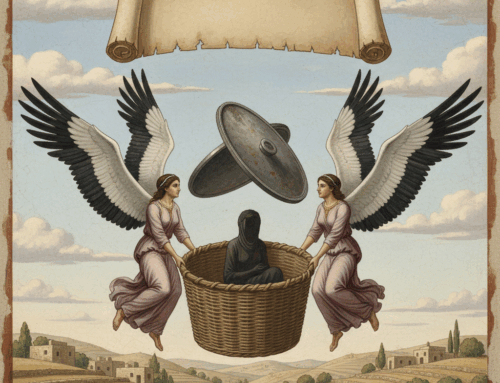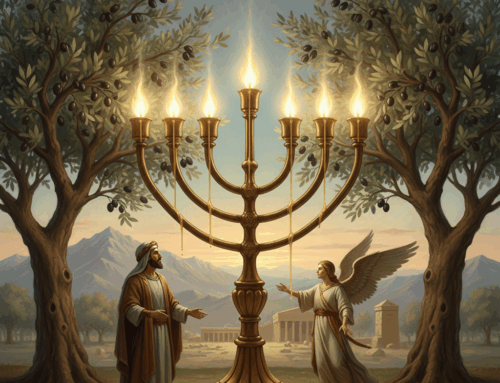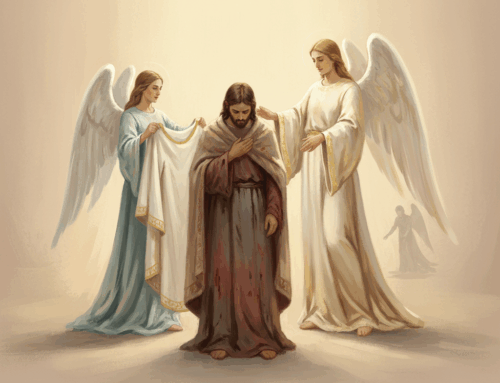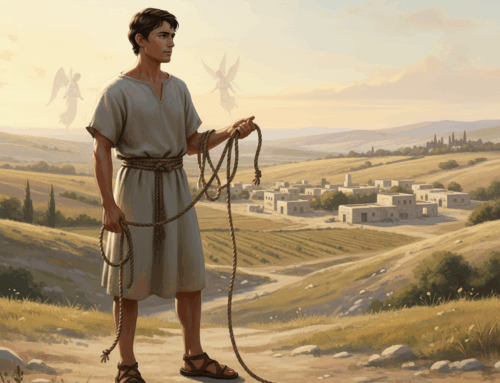

Matthew 24:29-31, 36-51
29 “Immediately after the tribulation of those days the sun will be darkened, and the moon will not give its light, and the stars will fall from heaven, and the powers of the heavens will be shaken. 30 Then will appear in heaven the sign of the Son of Man, and then all the tribes of the earth will mourn, and they will see the Son of Man coming on the clouds of heaven with power and great glory. 31 And he will send out his angels with a loud trumpet call, and they will gather his elect from the four winds, from one end of heaven to the other. [1]
36 “But concerning that day and hour no one knows, not even the angels of heaven, nor the Son, but the Father only. 37 For as were the days of Noah, so will be the coming of the Son of Man. 38 For as in those days before the flood they were eating and drinking, marrying and giving in marriage, until the day when Noah entered the ark, 39 and they were unaware until the flood came and swept them all away, so will be the coming of the Son of Man. 40 Then two men will be in the field; one will be taken and one left. 41 Two women will be grinding at the mill; one will be taken and one left. 42 Therefore, stay awake, for you do not know on what day your Lord is coming. 43 But know this, that if the master of the house had known in what part of the night the thief was coming, he would have stayed awake and would not have let his house be broken into. 44 Therefore you also must be ready, for the Son of Man is coming at an hour you do not expect.
45 “Who then is the faithful and wise servant, whom his master has set over his household, to give them their food at the proper time? 46 Blessed is that servant whom his master will find so doing when he comes. 47 Truly, I say to you, he will set him over all his possessions. 48 But if that wicked servant says to himself, ‘My master is delayed,’ 49 and begins to beat his fellow servants and eats and drinks with drunkards, 50 the master of that servant will come on a day when he does not expect him and at an hour he does not know 51 and will cut him in pieces and put him with the hypocrites. In that place there will be weeping and gnashing of teeth. [2]
A SECOND- AND THIRD-CENTURY Roman clergyman calculated that Jesus would return in AD 500. His prediction was based on the dimensions of Noah’s Ark. Christ did not return at that time. On January 1, 1000, many Christians in Europe, as you can imagine, predicted the end of the world. Sadly, some Christians, if they can be called that, reacted to that millennial mark in a military fashion. As the first of the year approached, Christian armies traveled to some of the pagan countries in Northern Europe in order to make converts, by force if necessary, before Christ returned. Christ did not return then. In 1415 the Taborites, a group greatly influenced by the apocalyptic writings of Joachim of Fiore (ca. 1135–1202), thought that Christ would return once they shed “the blood of the enemies of Christ”—i.e., defeated their persecutors. The group disbanded after they didn’t fare so well against the German army. Christ did not return. Also in the Middle Ages, Pope Innocent III took the number 618 (the year Islam was founded) and added the number 666 (the number of the beast) to get 1284 as the year of Christ’s final judgment. Christ did not return.
On February 14, 1835, Joseph Smith, the founder of The Church of the Latter-Day Saints, called a meeting of Mormon leaders. He announced that Jesus would return within fifty-six years (History of the Church, 2:182). Earlier, in or around the year 1832, Smith wrote in Doctrines and Covenants, 130.17, “I prophesy in the name of the Lord God, and let it be written—the Son of Man will not come in the clouds till I am eighty-five years old.” Smith would have been eighty-five in 1890. Unfortunately, a mob murdered him before his thirty-ninth birthday. Christ did not return. William Miller, founder of a popular end-times movement that bore his name— “Millerism”—predicted that the second coming would occur sometime between 1843 and 1844. Christ did not return. In 1874 Charles Taze Russell, founder of what is now known as the Bible Student movement, from which came the Jehovah’s Witnesses (Watchtower and Tract Society) and other organizations, predicted the rapture in 1910, followed by the end of the world and Christ’s invisible return in 1914. Christ did not return (or at least no one saw him).
In 1986 the group The Children of God predicted that Russia would defeat the United States and Israel, establishing a worldwide dictatorship. Then, in 1993, Christ would return. Christ did not return. In 1988 Whisenant Edgar authored the book 88 Reasons Why the Rapture Is in 1988, and Colin Deal wrote Christ Returns by 1988. Those books sold over four million copies. Christ did not return. Lee Jang Rim of the church Mission for the Coming Days prophesied that Jesus would return through the Sydney Harbor on October 28, 1992. Christ did not return (and sadly, Rim did not return as well, walking away with 4.4 million dollars from his followers’ life savings). In 1998 a Taiwanese cult in Texas claimed that Christ would return and invite the faithful followers aboard a UFO. Christ did not return (and to my knowledge, no UFO was spotted). Also in 1998—a good year for such prophecies, as 666 times three equals 1998—psychic Edgar Cayce taught that a secret, underground chamber would be discovered between the paws of the Great Sphinx in Egypt. Within that chamber would be documents about the history of the lost city of Atlantis. This new revelation would activate the second coming of Christ. Christ did not return. In 2000 . . . well, the list of false prophecies is too long. Each time Christ did not return. To give one final example, Harold Camping twice predicted the end of the world. He advertised on his fifty-five radio stations and on 6,000 billboards, “Judgment Day is coming May 21, 2011. The Bible guarantees it!” You could even sign up for a live Twitter feed. Christ did not return. Camping then, without apology for his earlier false prophecy, named October 21, 2011, as the right date of, Christ’s return. Again Christ did not return.[3]
Those false prophets and false prophecies are nothing to laugh at. They actually serve to hold Christ up to ridicule, as if the world needs more encouragement to ridicule Christ. Those who have made such claims were either ignorant of or disobedient to Jesus’ clearest sentence in this often-unclear Olivet Discourse: “36 But concerning that day and hour no one knows, not even the angels of heaven, nor the Son, but the Father only.”
Considering such a plain statement, it’s astonishing that some Christians still believe they can work out the date of Christ’s second coming! Speculation of the timing is nothing less than blasphemy, for the man who speculates is seeking to steal from God secrets which belong to God alone. Jesus gives quite specific signs for the temples’ destruction, but he gives no such answer regarding his second coming. He simply continues to tell them to be ready.
WHAT WE DON’T KNOW
Listen to verse 36 again, “36 But concerning that day and hour no one knows, not even the angels of heaven, nor the Son, but the Father only.” The terms “that day” and “hour” are synonymous terms they refer to what both the Old and New Testament call “the day of the Lord” or judgment day. The New Testament refers to it as “the Parousia” (Greek word for “coming” used in 24:39, 42, 43, 44, 46, 50; 25:10, 19, 27).
Concerning when that time will be, Jesus says, only the Father knows. The angels of heaven do not know. The heaven-sent Son does not know. The highest heavenly created beings and the highest uncreated Being don’t know. Yet, some Christians claim to know because it brings them attention and sells their books to naïve believers. God the Father alone has such knowledge.
That is clear enough. What is not so clear to us is why Jesus doesn’t know. It’s “unsettling” that the Son—who is so intimate with the Father throughout the Gospels—doesn’t know something his Father does. Or more to the theological point, how is it that the second person of the Trinity doesn’t know something? Doesn’t Jesus know everything?
Philippians 2:6-8 tells us Jesus chose to limit his divine powers when he became a man. God is omnipresent, omnipotent, and omniscient. Jesus possessed these powers but chose not to exercise them at most points in his earthly ministry. As God, Jesus is omnipresent, but he traveled from place to place by foot, or boat, or donkey. He walked to Jerusalem. When he walked, he laid aside his omnipresence. As God, Jesus is omnipotent, and yet he became hungry. Without sleep, he became tired. He did not draw on his omnipotence to fill his empty stomach or to refresh his weary body.
Jesus is omniscient, yet he laid aside his knowledge too. Jesus asked genuine questions in the Gospels. In Mark 5:30-32, asked who it was that touched him and looked around to see who it might be. In Mark 9 he asked his disciples about what they were arguing. In John 5:6, he asked a man how long he had been sick. On other occasions, he asked visitors what they wanted him to do for them (Matthew 20:21, 32).
If Jesus had constantly exercised his divine attributes, he would not have led a genuine human life. If he endured no human limitations, then his incarnation was fake. If the crucifixion caused him no pain, how could he suffer for us? If no bodily desires touched him, how could we say he was tempted in every respect as St. Author of Hebrews tells us (Hebrews 4:15)? Jesus, in his unglorified humanity, truly did not know when he would return. He did not need to know, nor do we. He finished his work, so he is ready to return.
The next logical question would be this: does Jesus now know when he will return? Now that he has returned to his heavenly glory that was his before the world began, in his post incarnational state, does he now know the time of his return? It may be a logical question, but it is one that invites what John Calvin would call “vain speculations.” Some answers are for us, and some are left only to the mind of God.
WHAT WE DO KNOW
What do we know about the Day of the Lord? We know three things. First, it will be obvious. Second, it will be glorious. Third, it will be unexpected.
First, it will be obvious. Four illustrations point out the obvious for us. Two come from verses 27, 28, if we can go back there. His return will be as obvious as lightning flashing from one end of the sky to the other and as obvious as a group of vultures gathering around the carcass. It will also be as obvious as those great lights created on day four of creation suddenly turning off: “the sun will be darkened, and the moon will not give its light, and the stars will fall from heaven” (24:29). That darkness contrasts to the heavenly “sign of the Son of Man” (24:30).
We’re told that Christ will return in great glory and in such a way that all the tribes of the earth will see him (24:30; Revelation 1:7). There will be some light about the Light of the World. Perhaps John’s words— “They will need no light of lamp or sun, for the Lord God will be their light” (Revelation 22:5b)—shed some light on this verse. Perhaps Paul’s phrase “in flaming fire” (2 Thessalonians 1:8) speaks to this. The reason everyone will see him is that he is the only light in the universe if we are to take the words of verse 29 literally and not metaphorically (they can be either).
The fourth and final illustration is that of the trumpet call. Jesus has used our sense of sight—you will see this and see that. Next he uses our sense of sound. Just in case you miss seeing his return, you will hear it: “And he will send out his angels with a loud trumpet call” (v. 31). How loud with this trumpet call be? I imagine it will be loud enough for the deaf to hear! The return of Christ will be loud, public, universal, personal, and visible. In other words, it will be obvious.
Second, it will be glorious. Notice the title Jesus uses for himself in relation to his second coming. It is the title “Son of Man.” He uses it four times in our text (vv. 30 [twice], 37, 39) and six times in chapter 24. That title does not have to do with Jesus’ humanity but rather his divinely bestowed authority. It is used in Daniel 7:13, a passage in which we learn that “the Ancient of Days” (God the Father Almighty) gave this Son of Man “dominion and glory and a kingdom, that all peoples, nations, and languages should serve him; his dominion is an everlasting dominion, which shall not pass away, and his kingdom one that shall not be destroyed” (Daniel 7:14). It’s Daniel’s version of Matthew’s conclusion— “All authority in heaven and on earth has been given” to Jesus (28:18).
“Other points of our text bring out what we can and should know about the glory of Christ’s return. Every phrase of verses 29, 30, and 31 is brimming with Christ’s power and glory.
- Verse 29: He will appear with a heavenly light show. Whatever is described in that verse, it is an impressive cosmic upheaval. It will make the most incredible fireworks display look amateurish. …
- Verse 30: Look at the phrases “all the tribes” and “the clouds of heaven” and “with power and great glory.” For everyone to see Jesus coming from Heaven—appearing or arriving (parousia) as the everlasting ruler of this earthly dominion—is another impressive image.
- Verse 31: Note Jesus’ absolute authority— “he” and “his”— “And he will send out his angels . . . and they will gather his elect from the four winds, from one end of heaven to the other.”18 What parousia power! He has the whole world in his hands (v. 30), and he has the whole heavens in his hands too — “from one end of heaven to the other” (v. 31).”[4]
One commentator notes concerning this text:
The second personal coming of Christ will be as different as possible from the first. He came the first time as “a man of sorrows, and familiar with suffering” (Isaiah 53:3): he was born in the manger of Bethlehem, in lowliness and humiliation; he took the very nature of a servant and was despised and not esteemed; he was betrayed into the hands of wicked men, condemned by an unjust judgment, mocked, flogged, crowned with thorns and at last crucified between two thieves. He will come the second time as the King of all the earth, with royal majesty: the princes and great men of this world will themselves stand before his throne to receive an eternal sentence: before him, every mouth shall be silenced, and every knee bow, and every tongue shall confess that Jesus Christ is Lord.[5]
Third, it will be unexpected. This is the point of verses 37–44 along with verse 50 (25:13). Verse 50 tells us that “the master of that servant will come on a day when he does not expect him and at an hour he does not know.” Then verse 44 summarizes the illustrations of Noah, the two men, and the two women by saying, “Therefore you also must be ready, for the Son of Man is coming at an hour you do not expect.”
WISE RESPONSE
In verses 37-51, Jesus emphasizes the theme of unexpectedness, using four illustrations—the flood, the working men and women, the thief in the night, and the two servants or two types of servants. The point of Jesus’ many illustrations on unexpectedness is to rouse unbelievers and believers to expectancy—that is, to stay awake (vv. 42, 43) or to be ready (v. 44) or, put differently and more completely, to be wise.
As at the end of the Sermon on the Mount, here at the end of chapter 24 Jesus contrasts the wise with the foolish. What then does the wise person do? The most obvious first step is to believe in Jesus and take him at his word. If you don’t believe Jesus said what is written here or that he has both the power to say and to judge, and that he is actually coming to do so, then Jesus’ call to keep watch falls on deaf ears.
Second, the wise person does good and not evil. To “stay awake” or to “be ready” is more than the attitude of attentiveness. It is also the action of attentiveness. We are to wait expectantly as we work expectantly. Every illustration Jesus uses involves people working. The least obvious is the one about the thief in the night. The idea is this: if you knew a thief was coming tonight, you would do something about it. You would perhaps secure the entranceways, set up a trap, call the authorities, or grab him before he grabs your stuff—you “would not have let [your] house be broken into” (v. 43).
Jesus recounts the story of Noah and the flood from the perspective of those who were judged—the careless or clueless. But if you see that story from Noah’s perspective, we know that Noah worked and worked and worked on that big boat. What a picture of expectancy! He had both the attitude and the actions of attentiveness. He thought, Judgment is coming. I believe God’s word. I’d better do what he says. I better get to work.
Next, we have the illustration of the four workers. The theme of work is evident. But what is not obvious is what differentiates one worker from the other. Why is one taken and one not? Is “taken” a sign of being saved and “left” a sign of judgment? It’s not clear. Based upon the illustration from Noah’s generation, those who were taken were taken by the waters of God’s judgment. I think you may actually want to be left behind. Either way, the one taken and the one left are both working. So obviously, merely putting forth effort does not lead to salvation. They are both hard at work at their everyday God-given vocation.
Perhaps the final illustration will clarify whether Jesus judges on the quality of work or the quality of the heart. Jesus contrasts “the faithful and wise servant” with the “wicked servant” who works only for himself and his own enrichment. Look at verses 45, 46:
45 “Who then is the faithful and wise servant, whom his master has set over his household, to give them their food at the proper time? 46 Blessed is that servant whom his master will find so doing when he comes.
Jesus contrasts this expectant industrialism with diverse levels of unbelief or faithlessness. The first three illustrations involve people who don’t listen and so don’t care. This is the culture we live in, isn’t it? People are so busy working (“grinding at the mill”) and/or entertaining themselves (“eating and drinking” or perhaps better “wining and dining” or “gorging and guzzling”) that they think those who preach “repent, judgment is coming” are as crazy as an old man building an ark in the middle of the desert for 120 years (Genesis 6:13, 14; cf. 2 Peter 2:5).
Remember, Jesus’ parables do not function as advice to you on how to run a household, how you spend your money, or whether you should be nice to people. They are about the Kingdom, grace, and judgment. Who are the bad guys in the parables? The religious professionals of Israel are the bad guys. So the wicked servant in this passage, just as in all of Jesus’ parables, represents the religious and political leaders of Israel who were out to serve themselves and were certain that God was already pleased with them because of their position. Therefore, they felt free to do exactly as they pleased.
This this wicked man is called a “servant,” he has “fellow servants,” fellow workers in the House of Israel. Jesus is not telling you that you need to try harder, do better, or work smarter to escape the final judgment. He is inviting those who have ears to hear to repent of serving themselves, to receive his perfect work on their behalf, and to receive their joy and fulfillment through serving the living God by passing on this good news to their lost and dying neighbors.
Those who refuse and wish to stand on their own works (like the religious professionals of Israel in Christ’s earthly ministry) can only look forward to God’s judgment: “50 the master of that servant will come on a day when he does not expect him and at an hour he does not know 51 and will cut him in pieces and put him with the hypocrites. In that place there will be weeping and gnashing of teeth.”
It’s not church work or charity work that God requires. In John 6, he records an incident where the crowds come to Jesus seeking more free food. The Lord uses it as an opportunity to explain what one work it is that impresses God:
27 Do not work for the food that perishes, but for the food that endures to eternal life, which the Son of Man will give to you. For on him God the Father has set his seal.” 28 Then they said to him, “What must we do, to be doing the works of God?” 29 Jesus answered them, “This is the work of God, that you believe in him whom he has sent.”[6]
[1] The Holy Bible: English Standard Version (Wheaton, IL: Crossway Bibles, 2016), Mt 24:29–31.
[2] The Holy Bible: English Standard Version (Wheaton, IL: Crossway Bibles, 2016), Mt 24:36–51.
[3] O’Donnell, 717-718.
[4] O’Donnell, 721-722.
[5] J. C. Ryle, Matthew: Expository Thoughts on the Gospels, Crossway Classic Commentaries (Wheaton, IL: Crossway, 1993), p. 232.
[6] The Holy Bible: English Standard Version (Wheaton, IL: Crossway Bibles, 2016), Jn 6:26–29.