
Galatians 4:1-7
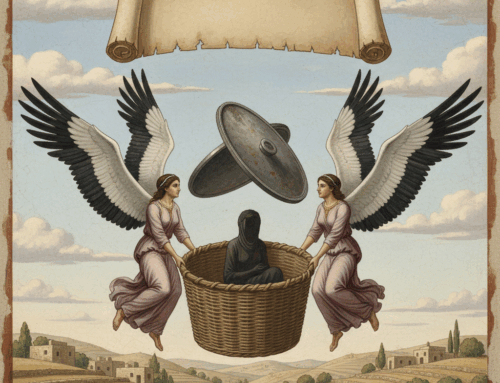
Slavery: I mean that the heir, as long as he is a child, is no different from a slave, though he is the owner of everything, 2 but he is under guardians and managers until the date set by his father. 3 In the same way we also, when we were children, were enslaved to the elementary principles of the world.
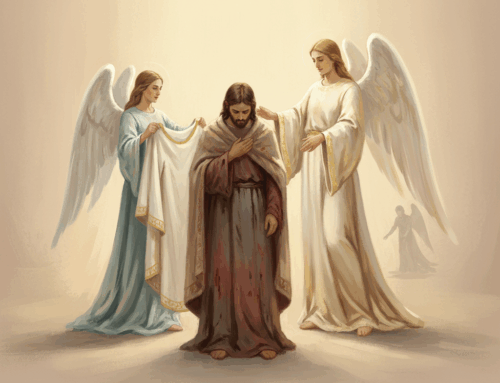
Sonship: 4 But when the fullness of time had come, God sent forth his Son, born of woman, born under the law, 5 to redeem those who were under the law, so that we might receive adoption as sons. 6 And because you are sons, God has sent the Spirit of his Son into our hearts, crying, “Abba! Father!” 7 So you are no longer a slave, but a son, and if a son, then an heir through God.
‘Christianity is not about good people getting better; it is about real people coping with their failure to be good.’ – David Zahl
Paul has been telling the Galatian congregations about God’s one-way love for Abraham. God promised that he would be Abraham’s God, that Abraham and his offspring would be God’s people, and that God would dwell with them. Theologians call those promises the “Covenant of Grace.” God’s one-way contract with Abraham was unconditional. Neither Abraham nor Abraham’s children could earn what God freely gives as a gift.
So, if our love and acceptance is all of God, why did God give Abraham’s children a conditional contract through Moses that promised performance-based rewards? The Mosaic Law was given to clearly teach what sin is, and how desperately we crave our own glory, and how desperately we need deliverance. The Law doesn’t cancel God’s promise; it showcases the glory of the promise because it drives home the idea that ONLY GOD CAN KEEP HIS LAW and ONLY THE GOD-MAN CAN PAY THE WAGES OF MAN’S SINS.
Both the one-way promise to Abraham and the conditional contract mediated through Moses have one person in mind: Messiah Jesus, the Promised Seed of the woman (Gen. 3:15), child of Adam, child of Seth, child of Noah, child of Shem, child of Abraham, child of Isaac, child of Jacob/Israel, child of Judah, child of David.
Paul told us God’s Law had an expiration date, a “use by” date, so my attempts to rely on its ceremonies of circumcision and animal sacrifice, its patriarchy, its racial and gender restrictions, its civil and political statutes, are all ROTTED FLESH.
Those given trust in the Promised Seed are all one in Christ Jesus (male/female, Jew/Gentile, Slave/Freeman). Christ alone has achieved all of my rewards. I have been given EVERYTHING in Him. This side of the cross, the Law shows me sin of which I need to repent; the Law shows how Jesus fulfilled perfectly all my failures and details all of his perfections; and it promises that day when my sin nature is finally destroyed through my earthly death or through Jesus’ earthly return (whichever comes first). Only then will I love God and neighbor perfectly and eternally as I was created to do.
Paul the lawyer now moves from an example of contract law (3:15-29) to an example of probate law. Our passage this morning shows us the two states of mankind: (1) slavery (4:1-3); and, (2) sonship (4:4-7).
-
- SLAVERY (4:1-3)
- Biology and Law (1-2)
-
-
-
- The nice men from Jerusalem taught that they were God’s heirs because of their biological descent from Abraham, their circumcision, and their commitment to Moses. So Paul brings up an example of probate law.
- Both Jews and Gentiles would understand the basics of probate law: if you are a child of the father, you inherit your father’s property upon his death. That was a principle of both Mosaic Law and Roman law.
- So the nice men from Jerusalem were offering the nice people of Galatia a chance to ensure their inheritance. If they would get circumcised and come down front to the anxious bench as the choir sang “O How I Love I Thy Law,” and there made a promise to keep the Law of Moses, then they could seal their inheritance to Abraham’s blessing with a little bit of grace from Messiah.
- The nice men from Jerusalem were answering the question that nice men had asked of Jesus, “What must I do to inherit eternal life?” (Mk. 10:17; Lk. 10:25; 18:18).
- Jesus’ answer was to keep the Law of Moses perfectly your entire life. But the nice men from Jerusalem had watered down Jesus’ command with some cheap grace: You don’t have to be perfect; the Law is quite flexible. Messiah will get you in; do the best you can and you will earn your inheritance if you’re circumcised like Abraham and pious like Moses. God helps Jews who help themselves.
- They offered a recipe for inheritance: To one-half cup of grace, add one-quarter cup of sincere penance and one-quarter cup of good works. Shake vigorously; slather generously. This is our go-to recipe: if you do something bad, spend time navel-gazing and obsessing over it as penance, make a New Year’s resolution to try harder next time, and then go out and make up for the bad by performing something good.
- We want to EARN our inheritance. The modern Church asks that same question asked of Jesus: What must I DO to inherit eternal life? How do I GET IN, and how do I STAY in once I’ve gotten in? Tell me what to do!
- But Paul says that merely being a biological child of Abraham does not guarantee inheritance of relationship with God any more than being a young boy with a trust fund guarantees you freedom to spend what you want however you wish. Every child with a trust fund must have a trustee and/or a guardian until they enter adulthood.
- Jew or Gentile, young or old, male or female, slave or freeman — all who want to DO something to inherit what God freely offers in Christ are still living like slaves.
- The word “guardians” in vs. 2, is different from the “guardian” of 3:24. In 3:24 he speaks of the family slave who delivered children to and from school, whose job was to beat young boys into discipline. He was an unloved and unlovable person by the nature of his job.
- But the guardians of 4:2 are legal guardians of children whose parents have passed away or become incapacitated. These may be more benevolent figures, such as relatives. They may simply be business managers. The point is the child is not free until adulthood when the land and money becomes his alone.
- Maybe you know of friends or family members who have gone out of their way to suck up to wealthy people so they will be named in the will. But until that wealthy person dies, the will can always be changed and so one must be a slave to the good graces of the will-maker.
- Inheritance conditioned upon performance means that you can NEVER know when you have done enough. Neither Jew nor Gentile can ever be free under a human performance-based legal system.
-
-
- Serving “Elementary Principles” (3)
-
-
- Paul says in v. 3, “In the same way we also, when we were children, were enslaved to the elementary principles of the world.”
- The meaning of “elementary principles of the world” continues to be debated by biblical scholars. The phrase appears again in v. 9, and in Col. 2:8, 20. Paul is addressing both Jew and Gentile in this passage, as he has been from the beginning of the letter.
- So it’s not likely that he is making only a reference to the Mosaic Law as “elementary principles.” He is using the phrase to describe all mankind’s condition before Jesus came.
- Paul is speaking to the Jews with reference to their seeing the Mosaic Law as moralism, performance-based religion. But he is also speaking to the Gentiles and their various performance-based pagan religions. Vs. 8: “Formerly, when you did not know God, you were enslaved to those that by nature are not gods.”
- “On this understanding, the elements of the world can ‘cover all the things in which man places his trust apart from the living God revealed in Christ; they become his gods, and he becomes their slave.’” In other words, man can enslave himself to God’s Law or to his own little “l” laws.
- Both are performance-based systems. Both create the nagging sense of imperfection because God’s Law is written into creation and upon the hearts of all human beings. If that sound’s strange, read Ecclesiastes for that is the very point of the Preacher. Every attempt by man under the sun to achieve an outcome for himself is like trying to herd the wind. It is slavery.
- “Elementary principles” means living better, minding your “P’s and Q’s” and achieving success for self-salvation. You and I do this all them time with God’s Word, even as Christians. We believe that the better we are at keeping the rules, the more mature we have become as believers because we are hard-wired for “successes.”
- Sinful man is all too easily seduced into believing that outward performance should earn the approval of both men and God. I can become enslaved to the elementary principles that my outside-the-cup righteousness should earn me something or prove my spiritual improvement to others around me.
- Let me give you an example of how utterly fruitless that idea is. I have lived in San Antonio for over 30 years. I have lived in the same house for 26 years. I pay my taxes regularly. I haven’t been arrested. I have served my community as a public servant and in private business. I do charity work. I am a husband, a father, a pastor. I strive to obey the laws of my community and to contribute to its well-being.
- So what would happen if I show up before the city council one day and demand a reward for my 31 years good behavior? I would like a plaque in my honor, a financial reward, a mayoral proclamation that every January 15th (my birthday) shall be “Keith Howard Day!” Since it’s also Dr. Martin Luther King’s birthday, I’m willing to share it; the mayor can proclaim it “Martin Luther Keith Day,” if he likes. That’s okay with me; I’m a humble guy as well as an outstanding citizen.
- You see the absurdity? I would just be asking for props for following the “elementary principles,” the rules everyone knows by instinct as well as statute – the rules all of us must follow. My slavery comes not only from fooling myself into thinking I have kept the rules of citizenship perfectly, but in thinking that by doing so I deserve a reward.
- Notice that Paul says, “…when we were children, were enslaved….” In other words, the immature need rules. The mature perform by nature without the nagging of rules of law. That’s why Jesus responds to the “tell me what to do” crowd with the commands of the Mosaic Law they pride themselves in knowing so well.
- The deep waters of the Christian life are not the elementary principles of “do this” and “don’t do that.” That is the slavery of self-dependence and immaturity as opposed to the maturity of freedom in Jesus-dependence.
- The things that matter most to your heart can NEVER be obtained by performance. You can get really thin and fit, dress in the finest clothes, and get the best hairstyle but you cannot make someone fall in love with you.
- You can become the best student, the hardest-working person in your company, the most admired supermom on Facebook, the best athlete on your team; but you cannot make your teachers love you, your boss respect you, your husband and children truly love you, or your coach put you in for every play. None of those people will become the father that never loved you enough or the mother who never gave you her unreserved approval.
- If I can be the best dad, the best mom, the most successful in my vocation, the most handsome, the most beautiful, the most spiritual – the very best ME I can be – then I will have earned control of my environment. But you know down deep, just like Ecclesiastes teaches – that those elementary principles will never satisfy.
- The things that really matter down deep in your heart do not come by slavish performance. They come only by God’s one-way love for you as his precious child. So Paul moves from the slavery of potential heirs trying to impress the rich will-maker or the guardian of the estate, to the bliss of being a child of the Father. He moves from childish things to maturity, from what we were to what we are.
-
- SONSHIP (4:4-7)
- Fullness of Time (4-5)
-
-
-
- 4 But when the fullness of time had come, God sent forth his Son, born of woman, born under the law, 5 to redeem those who were under the law….
- That is such a beautiful phrase, “fullness of time” – the age of maturity, the age of spiritual instinct over ritual and rules, the age of Messiah over methodology.
- The Law never stops screaming “Do!” But in the fullness of time, God shouted “Done!” And notice that GOD DID IT! God sent forth his Son to be born a slave to the law and buy us out of our slavery (“redeem” – to buy, to buy out from the market).
- The very core of the gospel message is that it is God’s initiative, not ours, that makes us his children. That takes us back to Paul’s question: if we began by the Spirit what makes us think we mature ourselves by elemental principles of the world? It is not OUR ascent; it is GOD’S decent in the fullness of time that redeems us out from slavery.
- Paul says to the Ephesians, “But grace was given to each one of us according to the measure of Christ’s gift. Therefore it says, ‘When he ascended on high he led a host of captives, and he gave gifts to men.’ (In saying, “He ascended,” what does it mean but that he had also descended into the lower regions, the earth? He who descended is the one who also ascended far above all the heavens, that he might fill all things” (Eph. 4:7-10).
- This is the ONE-WAY love: not that we ourselves were loving him but that he himself loved us and sent out his son – a propitiation for our sins.
- God the Son, existing with the Father outside of time, was born of a woman and BORN under the law. That idea is so blasphemous to other religions that Roman culture considered it paganism. The early church struggled with it and tried to explain Jesus as a finite created being, or that God was one person with three different ways of relating to men. Jehovah’s Witnesses, Mormons, and Oneness Pentecostals struggle with it to this very day.
- But Paul says very plainly that God sent out (meaning pre-existing) his son, born of a woman. He didn’t appear to be flesh. He was both completely flesh and completely God – spirit and flesh, divine and human forever joined.
- Can you see how we have left the slavery of elementary principles and entered into the maturity of something entirely new and thoroughly amazing? Jesus brings us into maturity in the fullness of time. He purchases us out of slavery and delivers us to the Father who adopts us as his children.
-
-
- Adoption (5-6)
-
-
- “…so that we might receive adoption as sons.”
- Our identity changes from slave to child of the Father NOT through the “Do!” of the Law, but through the “Done!” announced by Jesus at Calvary.
- In Christ we are already loved infinitely and forgiven eternally. All our penance and all our performance have been done for us by Jesus.
- At those moments when we are proud of doing something good, God loves us. He loves us when we have failed and are struggling to hide our failure from everyone around us. He loves you as if you had never done those terrible things you wouldn’t even mention to your spouse. He loves you even though you have been abandoned or abused. He loves you whether you see yourself as a victor or a victim.
- He loves you regardless of whether you are plugged in to the right social circles or whether you think you are a social and economic loser. He loves you whether you do everything Christian culture demands of you for its approval, or whether you chose to follow God’s Word and your own conscience instead because it is for freedom that Christ has set you free!
- In fact, it was the demands of “Christian culture” and its alleged determination of what made a “true Christian” that led to Dr. Luther to write his 95 Theses and begin the Reformation we celebrated on October 31!
- Any number of things can separate you from the approval of Christian culture, but hear this: For I am sure that neither death nor life, nor angels nor rulers, nor things present nor things to come, nor powers, nor height nor depth, nor anything else in all creation, will be able to separate us from the love of God in Christ Jesus our Lord” (Rom. 8:38-39).
- If you are trusting into Christ, you are a child or Abraham. Much more, you are a child of God! You have the right and privilege and joy to call the Creator of the universe, “Father.”
- That Aramaic word, Abba, doesn’t mean “daddy”. There is no linguistic evidence to support such an interpretation, though some teachers have adopted an exegetical fallacy to the contrary. The word means “Father” just like Paul interprets it here. Paul is not wrong. He knows Aramaic far better than well-meaning modern writers.
- BUT even though the exegesis doesn’t support calling God, “Daddy” here, there is nothing wrong with expressing that kind of intimacy with the Father because he loves you infinitely in Christ Jesus.
-
Finally, Paul notes that we have been given the Spirit, sent into our hearts. That is a doctrine Paul doesn’t unpack right here in our text. But it is vital to these confused Galatians to know that the Spirit leads through the Word, apostolic teaching. Paul is looping them back to 3:2, “Did you receive the Spirit by works of the law or by hearing with faith?”
You cannot earn inheritance. You must be a child of the Father to inherit all the Father has laid up for you, including the presence of the Spirit here and now. If you are trusting into the perfect life and sacrificial death of Jesus, then you are a child and not a slave. You are not a slave to God’s “Big L” Law; you are not a slave to “little l” laws you make for yourself or your world or church culture makes for you.
As Paul wrote that now-perverted church of Rome, so I proclaim to you in Jesus’ name:
“For you did not receive the spirit of slavery to fall back into fear, but you have received the Spirit of adoption as sons, by whom we cry, “Abba! Father!” The Spirit himself bears witness with our spirit that we are children of God, and if children, then heirs—heirs of God and fellow heirs with Christ….” (Rom. 8:15-17).